

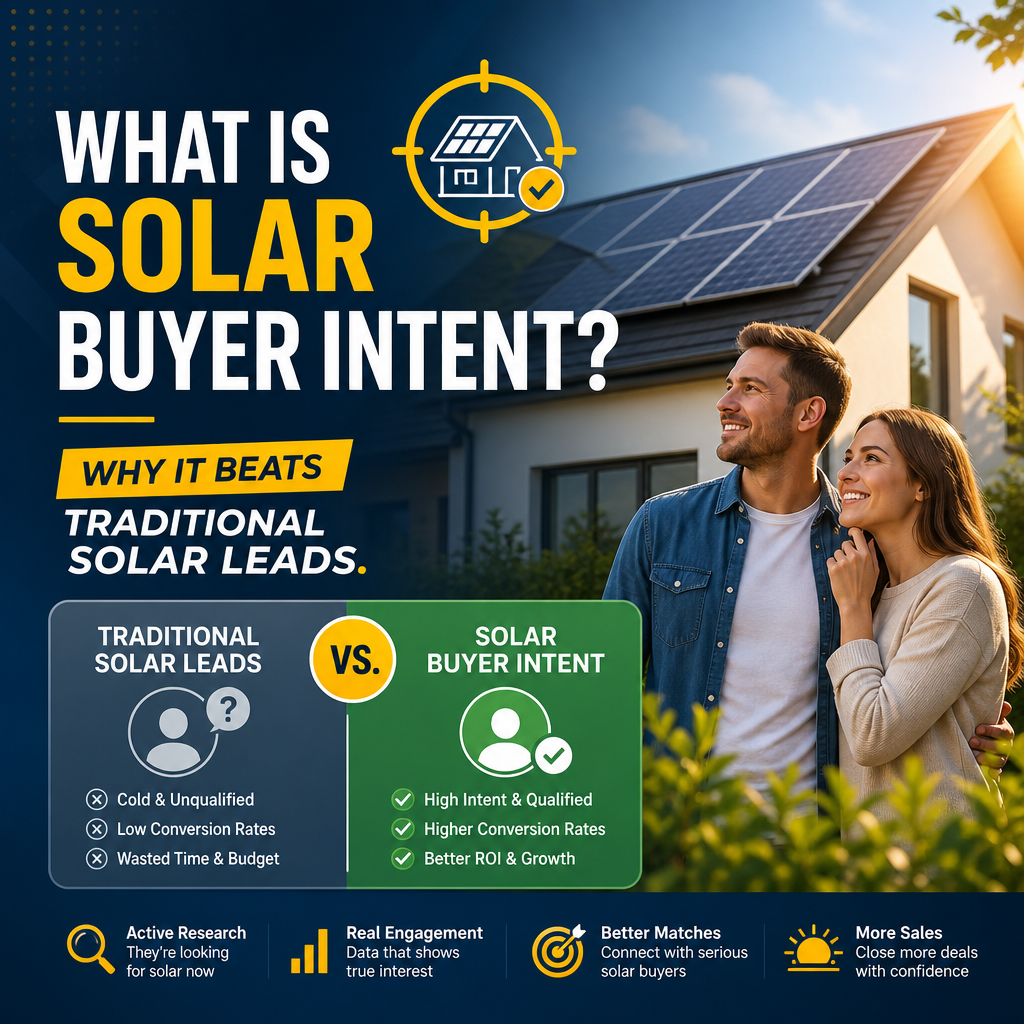
What Is Solar Buyer Intent? Why It Beats Traditional Solar Leads
What Is Solar Buyer Intent and Why It Matters More Than Traditional Solar Leads
A homeowner who downloads a general solar guide and a homeowner who requests quotes for a rooftop installation are both “leads.” But they are not equally likely to buy.
That difference is the idea behind solar buyer intent: the signals that indicate how seriously someone is considering a solar purchase and how close they may be to making a decision. For solar companies, understanding intent can be more useful than simply collecting more names and phone numbers.
What Solar Buyer Intent Means
Solar buyer intent describes a potential customer’s readiness to take a meaningful next step. It is not a guarantee that someone will buy. Instead, it helps distinguish early curiosity from active shopping.
Intent can show up in what a person asks or does. Someone comparing financing options, checking whether their roof qualifies, or requesting an installation timeline is likely further along than someone reading an introductory article about how solar panels work.
Common Signs of Stronger Intent
Signals may include:
- Requesting a quote or site assessment
- Sharing an address and recent electricity bill
- Comparing installers, equipment, or warranties
- Asking about financing, incentives, or payback periods
- Discussing when they want installation to happen
No single action tells the whole story. A homeowner might research financing months before moving forward, while another may be ready to book an assessment after one conversation. The value comes from looking at the context behind the inquiry.
How Buyer Intent Differs From a Traditional Solar Lead
A traditional solar lead is often defined by basic contact information: a name, phone number, email address, and perhaps a ZIP code. That information tells a company who to contact, but not necessarily why the person reached out or whether they are ready to talk.
Solar buyer intent adds another layer. It considers the person’s needs, actions, and timing. A lead who asks, “Can I get solar?” may need education. A prospect who says, “I have three installer quotes and want to compare battery options” needs a very different conversation.
This distinction matters because sales teams have limited time. Treating every inquiry as equally urgent can mean spending hours chasing people who are still exploring while ready-to-buy homeowners wait for a response.
Why Intent Matters More Than Lead Volume
More leads can create the appearance of growth, but volume alone does not measure opportunity. If most inquiries are unqualified, a larger lead list may simply produce more calls, follow-ups, and missed connections.
Focusing on solar buyer intent can improve several parts of the sales process.
Faster, More Relevant Follow-Up
High-intent prospects often benefit from a prompt response. They may be comparing installers now, not planning to start research next year. Recognizing that urgency helps teams prioritize outreach when it is most useful.
The conversation can also start in the right place. If a homeowner has already asked about battery backup, there is little value in opening with a generic explanation of solar panels.
Better Use of Sales Time
Intent signals help teams decide which inquiries need a sales consultation and which would be better served by educational content or a later check-in. This does not mean ignoring early-stage prospects. It means matching the response to their stage of consideration.
A Better Customer Experience
Homeowners do not want to feel rushed into a purchase they have barely begun to explore. Nor do they want to repeat the same details to multiple people after clearly stating what they need.
Using intent thoughtfully helps solar companies answer relevant questions, set realistic expectations, and avoid a one-size-fits-all pitch.
How to Use Solar Buyer Intent Responsibly
The practical starting point is simple: ask better questions and keep track of the answers. A form or first conversation might cover the homeowner’s property, average electricity costs, primary reason for considering solar, financing preferences, and desired timeline.
Then, use those details to guide—not dictate—the next step. A short timeline and a request for pricing may call for a quick consultation. A person who is unsure whether their roof is suitable may first need a straightforward explanation of site requirements.
Intent should never be treated as a perfect score. Budgets change, households make decisions together, and a prospect’s plans can shift. Respectful follow-up and clear information still matter.
The Bottom Line
Traditional solar leads tell you who raised a hand. Solar buyer intent helps you understand what that raised hand means.
For solar companies, the goal is not just to generate more inquiries. It is to recognize which homeowners are actively evaluating a purchase, respond to them appropriately, and support others until they are ready. That approach makes each conversation more useful—for the business and the buyer.