
How AI Is Transforming Solar Lead Qualification in 2026
How AI Is Transforming Solar Lead Qualification in 2026
Solar companies have long faced a familiar problem: a homeowner can be interested in solar without being ready—or able—to install it. Sales teams spend time chasing inquiries that turn out to involve unsuitable roofs, uncertain budgets, or addresses outside their service area. Meanwhile, promising prospects may wait too long for a response.
In 2026, AI is helping solar businesses sort through those inquiries faster. Rather than relying on a single form submission or a salesperson’s first impression, companies can bring together property information, customer responses, and conversation history to decide what should happen next. The goal is not to replace human judgment. It is to give each lead a more useful first response.
From Contact Forms to Property-Aware Screening
Traditional solar lead qualification often starts with a name, phone number, and address. Those details say little about whether a project is practical.
AI-assisted tools can help teams review publicly available property data and imagery to estimate factors such as roof size, orientation, shading, and available space. They may also flag details that need a closer look, including complex roof shapes or possible obstructions. Combined with service-area rules, this gives sales teams a better starting point before they schedule a consultation.
These assessments are preliminary. Trees can change, imagery may be outdated, and a model cannot confirm a roof’s structural condition from above. On-site evaluation and installer expertise still matter. Used carefully, though, early screening can prevent both homeowners and sales teams from spending time on an obviously poor fit.
Faster Conversations, Better Questions
Speed matters when someone requests a solar quote. AI-powered chat and messaging tools can respond outside business hours, answer basic questions, and gather information that helps determine the next step.
A useful qualification conversation might ask about:
- Whether the person owns the property
- Their approximate electricity usage or bill
- Their reasons for considering solar
- Interest in battery storage
- Their preferred installation timeline
- Whether they are exploring financing options
The advantage is not simply automation. A well-designed system can adapt its questions to the conversation. A homeowner interested in backup power may need a different discussion from someone focused on reducing daytime grid use.
There is a limit, however. AI should make it easy to reach a person, especially when questions involve financing, equipment choices, or site-specific savings claims.
Lead Scoring That Reflects Real Sales Readiness
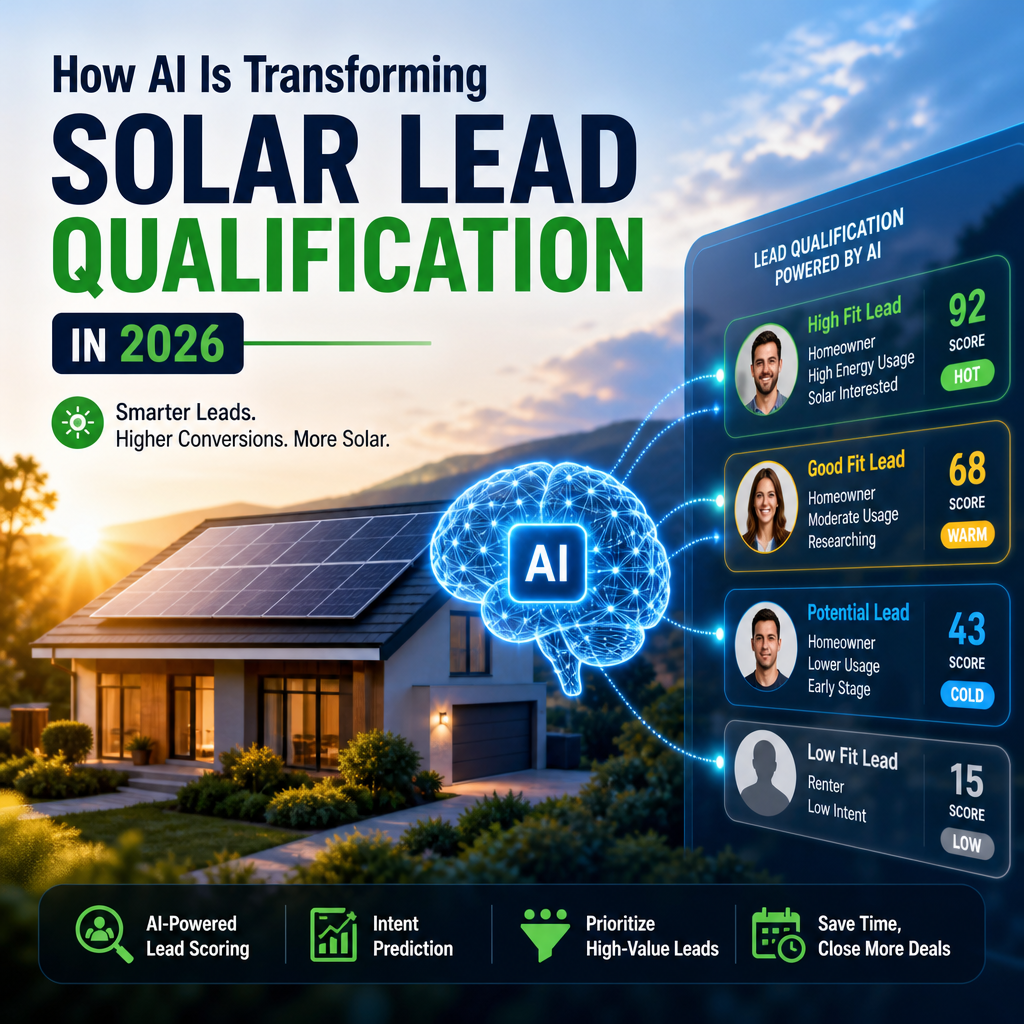
Not every qualified solar prospect is ready to buy immediately. In 2026, AI-driven lead scoring can help teams distinguish between project fit and purchase readiness.
A lead might have a suitable property but still be comparing options for a future renovation. Another might be ready to speak with an installer this week but need help understanding roof repairs. Treating both leads identically can lead to pushy outreach for one and an inadequate response for the other.
More useful scoring looks at several signals together: property characteristics, stated goals, engagement with follow-up messages, and requested timing. Teams can then route leads accordingly. Sales-ready prospects may receive a prompt call, while early-stage researchers receive educational material and a later check-in.
Scores should support decisions, not make them unquestionable. Companies need to review whether their criteria are excluding viable customers or making unfair assumptions from incomplete data.
More Relevant Follow-Up Without the Guesswork
Solar sales can involve a long decision cycle. Homeowners may need time to compare proposals, discuss costs with family members, or understand how incentives apply to their situation. AI can help teams follow up based on what a prospect actually asked about, rather than sending the same sequence to everyone.
Someone who asked about batteries might receive an explanation of backup-power options. A homeowner concerned about upfront cost might receive clear information about available payment structures, with appropriate caveats. If a prospect has not responded, the system can suggest a reasonable pause instead of an endless stream of reminders.
Good follow-up also depends on trust. Marketing messages should respect consent and contact preferences, and claims about savings or incentives should be checked against current, location-specific information.
The Human Role Becomes More Important
AI can organize information, identify patterns, and handle routine exchanges. It cannot promise that a roof is installation-ready, guarantee a customer’s savings, or decide which financial choice is best for a household.
That makes human review central to effective solar lead qualification in 2026. Installers and sales advisors still need to verify technical details, explain trade-offs, and correct errors in automated assessments. They also need clear processes for protecting customer data, particularly when working with addresses, utility bills, and financing information.
The strongest approach is a partnership: AI helps identify who needs attention and why; people provide the expertise and accountability to move a project forward. For solar companies, that can mean less time spent on unsuitable leads and more time helping homeowners make informed decisions.