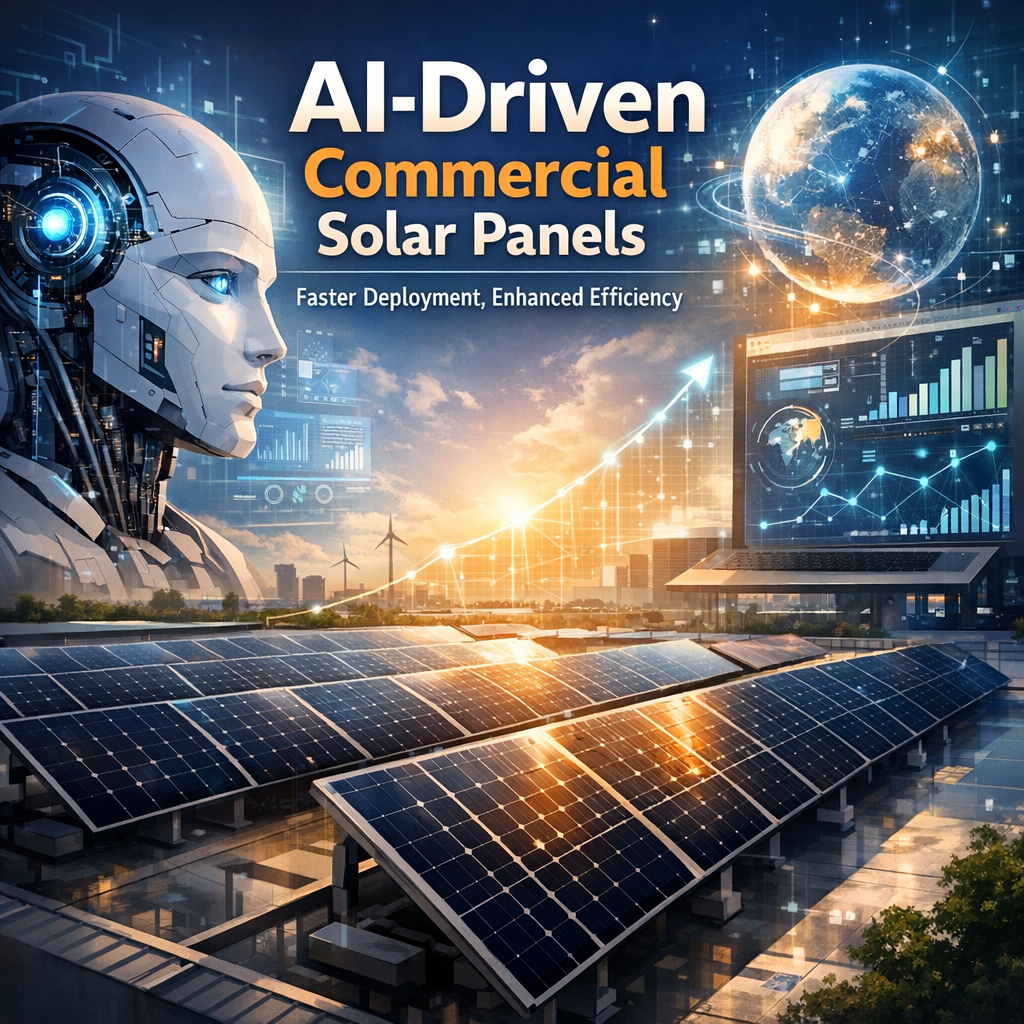
# AI‑Driven Commercial Solar: Faster Deployment, Higher Efficiency

The commercial solar energy sector is undergoing a transformative shift, thanks largely to the incorporation of Artificial Intelligence (AI). Businesses across the globe are rapidly adopting AI-driven systems to streamline the deployment and enhance the efficiency of solar installations. This integration not only promises significant cost savings but also boosts environmental sustainability.

The Rise of AI in Commercial Solar Power


AI is playing a pivotal role in reshaping how commercial solar power systems are designed, installed, and maintained. With its ability to analyze large datasets and make predictive decisions, AI technology is becoming an indispensable part of the solar industry.

Improved Design and Planning


AI-driven tools can analyze geographical, historical, and meteorological data to optimize the design of solar systems for specific locations. These tools can predict the potential energy yield and suggest the best orientation and angle of solar panels, taking into account local weather patterns and the solar path.

Streamlined Installation Processes


AI can also streamline the installation process. By using drones and imaging technologies, AI systems can survey a site and create detailed 3D maps that help in planning the layout of solar panels. This reduces human errors and accelerates the deployment process.

Enhancing Efficiency Through AI


Once solar panels are installed, AI continues to play a critical role in maximizing their efficiency. Through real-time monitoring and predictive maintenance, AI-driven solutions are setting new standards in the solar industry.

Real-Time Performance Monitoring


AI systems equipped with machine learning algorithms can continuously analyze the performance data from solar panels. These systems can identify inefficiencies or faults in real-time, allowing for immediate corrections and reducing downtime.

Predictive Maintenance


AI not only detects existing issues but can also predict potential future malfunctions before they happen. By analyzing trends and patterns from historical performance data, AI can forecast equipment failures and notify maintenance teams to address the issues preemptively.

Reducing Costs and Enhancing ROI


One of the most significant advantages of AI integration in commercial solar is the substantial reduction in operational and maintenance costs. This, in turn, enhances the return on investment (ROI) for businesses opting for solar energy solutions.

Lower Operational Costs


AI-driven systems reduce the need for constant on-site inspections and maintenance, as they can monitor and diagnose systems remotely. This not only cuts down on labor costs but also extends the lifespan of the solar installations by ensuring they operate optimally.

Increased Energy Production


By optimizing the performance of solar panels and reducing downtime through preemptive maintenance, AI systems enhance the overall energy production. This increased efficiency directly translates to higher energy outputs and better financial returns for businesses.

The Future of AI in Commercial Solar


The potential of AI in revolutionizing the commercial solar industry is vast. With continuous improvements in AI technology, future applications are expected to bring even more sophisticated solutions that could further simplify the deployment process and enhance the efficiency of solar systems.

Continuous Learning and Adaptation


Future AI systems will likely possess advanced learning capabilities that will enable them to adapt to changing environmental conditions and evolving energy consumption needs without human intervention.

Integration with Other Renewable Energy Sources


AI might also play a crucial role in the integration of solar systems with other renewable energy sources, creating more robust and efficient hybrid systems that can leverage the strengths of each energy source.

Conclusion


The integration of AI into commercial solar energy systems represents a significant leap toward more sustainable and efficient energy solutions. With faster deployment, enhanced efficiency, and reduced costs, AI-driven solar is not just an option but a necessity for businesses looking to invest in renewable energy. As technology evolves, the role of AI in commercial solar will only become more integral, leading to smarter, cleaner, and more productive energy solutions worldwide.