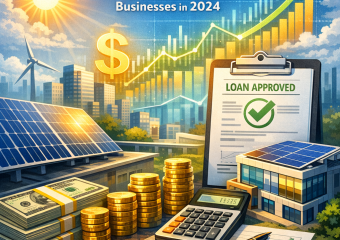


AI-Driven Commercial Solar Solutions from Discovery to Deployment
As businesses continue to seek sustainable and cost-effective energy sources, AI-driven commercial solar solutions have emerged as a game-changer in the renewable energy landscape. Harnessing the power of artificial intelligence (AI) to streamline the solar project lifecycle, these innovative systems are transforming how companies discover, design, implement, and manage solar energy installations. From initial site assessment to final deployment and beyond, AI enhances efficiency, accuracy, and scalability, making solar adoption more accessible and profitable than ever before.
Transforming the Solar Discovery Phase with AI
The journey toward a commercial solar installation begins with site discovery and feasibility analysis. Traditionally, this phase required extensive manual surveys, complicated data gathering, and time-consuming calculations to determine solar potential. AI-driven solutions revolutionize this step by leveraging vast datasets, satellite imagery, and machine learning algorithms to assess a site’s solar viability within minutes.
By analyzing factors such as rooftop area, shading from nearby structures or trees, historical weather patterns, and geographic location, AI models provide highly accurate predictions of expected solar energy output. Companies can quickly identify the best sites for installation, prioritizing locations that promise the greatest return on investment (ROI). This instant site scoring eliminates guesswork and accelerates decision-making for stakeholders.
AI-Powered Design and Optimization
Once a suitable site is identified, AI continues to add value through automated design and system optimization. Traditionally, designing a commercial solar array involved complex engineering, multiple software tools, and iterations between designers and clients. AI-powered platforms simplify this process by generating optimized system layouts tailored to the unique characteristics of each property.
With machine learning at its core, AI algorithms can simulate various panel configurations, inverter placements, and electrical connections to maximize energy capture and minimize losses. These designs account for real-time constraints such as structural limitations, local building codes, and budget requirements. Some advanced platforms even feature generative design—where AI autonomously creates multiple design options that push efficiency boundaries beyond human capabilities.
The benefits of this approach include reduced engineer workload, shorter design cycles, and improved system performance forecasts, empowering businesses to invest with confidence.
Streamlining Solar Deployment with Intelligent Automation
Deployment involves procurement, installation, and commissioning of solar equipment—a complex coordination effort traditionally prone to delays and cost overruns. AI-driven commercial solar solutions address these challenges by employing automation and predictive analytics to optimize supply chains and project management.
Intelligent platforms forecast material needs, schedule installations based on weather and labor availability, and monitor project progress via IoT-connected sensors. Real-time data analytics enable rapid identification and resolution of bottlenecks or quality issues, ensuring smoother workflows.
Furthermore, AI can assist with regulatory compliance by automatically generating required documentation and verifying installations meet local safety and technical standards. The integration of AI-powered drones and robotics in the installation process is gaining traction as well, enhancing precision and reducing human risk.
Post-Deployment Monitoring and Maintenance Through AI
The role of AI doesn’t end once the solar system goes live. Ongoing performance monitoring and maintenance represent critical aspects of sustaining long-term returns. AI-driven analytics platforms continuously track energy production, equipment health, and external environmental conditions.
By comparing actual output against predicted benchmarks, AI models can detect inefficiencies, faults, or potential failures early. Predictive maintenance alerts technicians before issues escalate into costly downtime, extending the lifespan of commercial solar assets.
Advanced AI systems also facilitate energy management by integrating with building energy management and demand response tools. They optimize when and how solar power is consumed, stored, or fed back into the grid, reducing operational costs and environmental impact.
The Future Outlook of AI in Commercial Solar Projects
The fusion of AI technology with commercial solar solutions heralds a new era for the green energy sector. From discovery through deployment to ongoing operation, AI’s influence drives smarter, faster, and more economical solar adoption. Businesses benefit from clearer insights, reduced risk, and enhanced scalability, accelerating their transition toward clean energy.
As AI capabilities continue to advance—incorporating more sophisticated data sources like real-time satellite feeds, weather prediction models, and blockchain-based energy trading—commercial solar implementations will become even more efficient and adaptable. We can anticipate innovations such as autonomous installation fleets, AI-assisted financing models, and personalized solar solutions tailored to evolving business needs.
Conclusion
AI-driven commercial solar solutions represent a comprehensive transformation of traditional solar project workflows. By automating and optimizing every phase from site discovery to deployment and ongoing management, AI removes many of the barriers that have slowed wide-scale commercial solar adoption. For companies aiming to reduce their carbon footprint while achieving economic benefits, leveraging these intelligent solar technologies is not just a future possibility—it is quickly becoming an essential strategy for sustainable growth.