

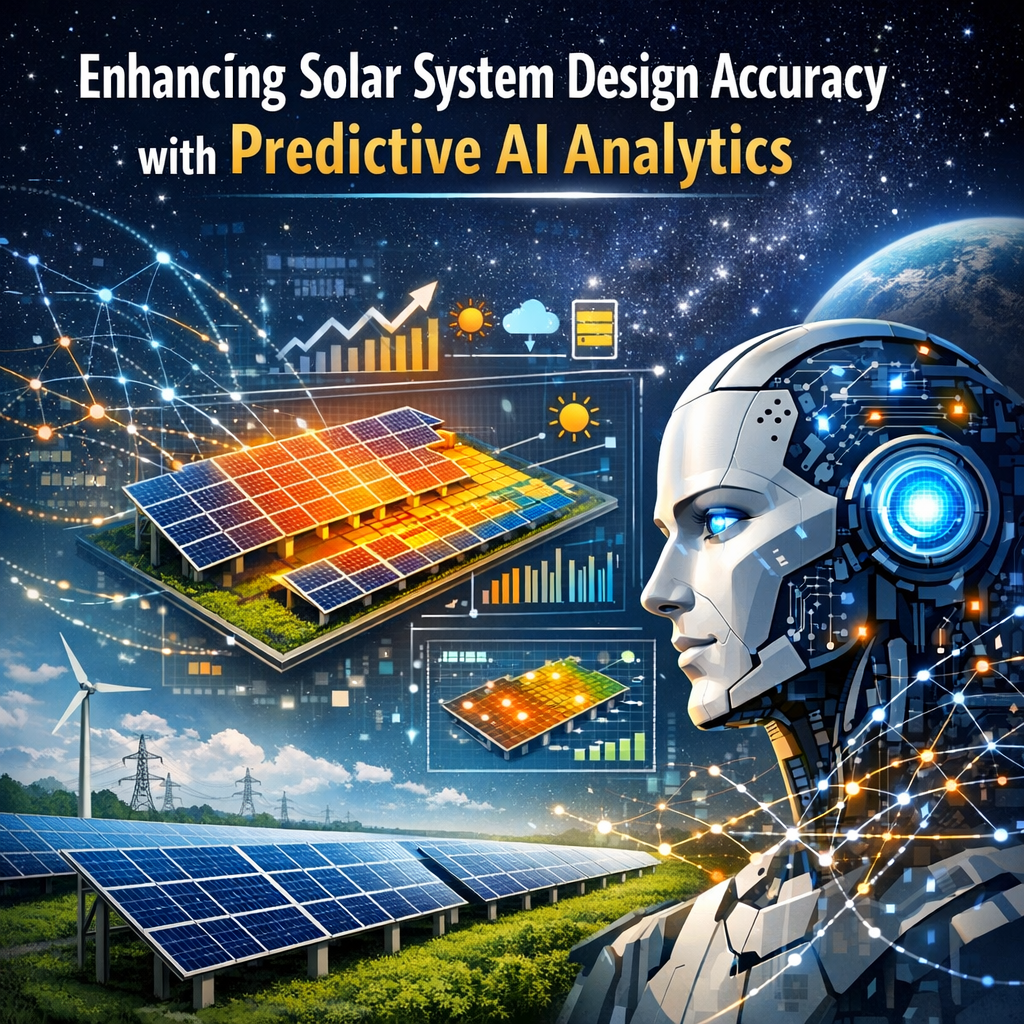
Enhancing Solar System Design Accuracy with Predictive AI Analytics
Predictive Solar Analytics: How AI Improves Accuracy in System Design
The integration of Artificial Intelligence (AI) in the solar energy sector is a game-changer, especially in the area of predictive solar analytics. With the growing demand for renewable energy solutions, the importance of accurate system design cannot be overstated. AI technologies are revolutionizing how solar power systems are planned, implemented, and managed, optimizing efficiency and sustainability. This blog post explores the significant benefits that AI brings to predictive solar analytics and, by extension, to system design accuracy.
Understanding Predictive Solar Analytics
Predictive solar analytics involves the use of data and advanced algorithms to forecast the energy output of solar systems. This predictive capability is crucial for effective planning and operation of solar installations. By accurately forecasting power output, stakeholders can ensure that the systems are not only efficient but also economically viable.
Key Components of Predictive Analytics
- Data Collection: Various types of data such as historical weather patterns, solar irradiance, and system performance are collected.
- Machine Learning Models: These models use the collected data to learn and make accurate predictions about future solar output.
- Analysis and Reporting: The data and predictions are analyzed to provide actionable insights.
The Role of AI in Enhancing Predictive Analytics
AI, particularly through machine learning and neural networks, plays a pivotal role in deciphering massive datasets more efficiently than traditional methods. Here’s how AI is enhancing predictive solar analytics:
Increased Accuracy
AI algorithms are exceptionally good at handling large volumes of data and uncovering patterns that may not be immediately apparent to human analysts. This ability enables them to predict solar energy output with higher accuracy, which is vital for optimizing the design and placement of solar panels.
Real-Time Data Processing
AI systems can process data in real-time, allowing for immediate adjustments to be made based on current weather conditions and other influencing factors. This capability ensures that the predictive models continuously evolve and adapt, enhancing their accuracy over time.
Scalability and Flexibility
AI systems can easily scale according to the size of the solar installation and can be adjusted for different geographical and environmental conditions. This flexibility is crucial for tailoring solar energy solutions to specific local requirements.
Practical Applications in Solar System Design
Incorporating AI into the design phase of solar energy systems leads to several tangible benefits. Below are some of the key applications:
- Optimal Placement of Solar Panels: AI can analyze geographical data and sun path analysis to determine the most effective placement of panels, maximizing energy absorption.
- Energy Yield Forecasting: Predictive models can forecast long-term energy yields considering various factors like seasonal variations and potential obstructions, which aids in financial planning and system sizing.
- Maintenance and Troubleshooting: AI can predict potential system failures or maintenance needs, allowing preemptive action that minimizes downtime and maintains high efficiency.
Challenges and Future Prospects
While AI in predictive solar analytics offers numerous benefits, there are challenges such as the need for high-quality data and concerns over data privacy. The future will likely see more sophisticated AI models that can integrate more diverse data types and offer even more reliable predictions.
Conclusion
The integration of AI into predictive solar analytics is transforming the solar energy industry by enhancing the accuracy of solar system designs. As the technology develops, we can expect even more efficient, cost-effective, and robust solar energy systems, propelling us further towards a sustainable future. The symbiosis of AI and renewable energy not only highlights the innovative pathways of modern engineering but also underscores a commitment to environmental preservation. As we advance, embracing these technologies will be crucial in meeting global energy needs sustainably.