
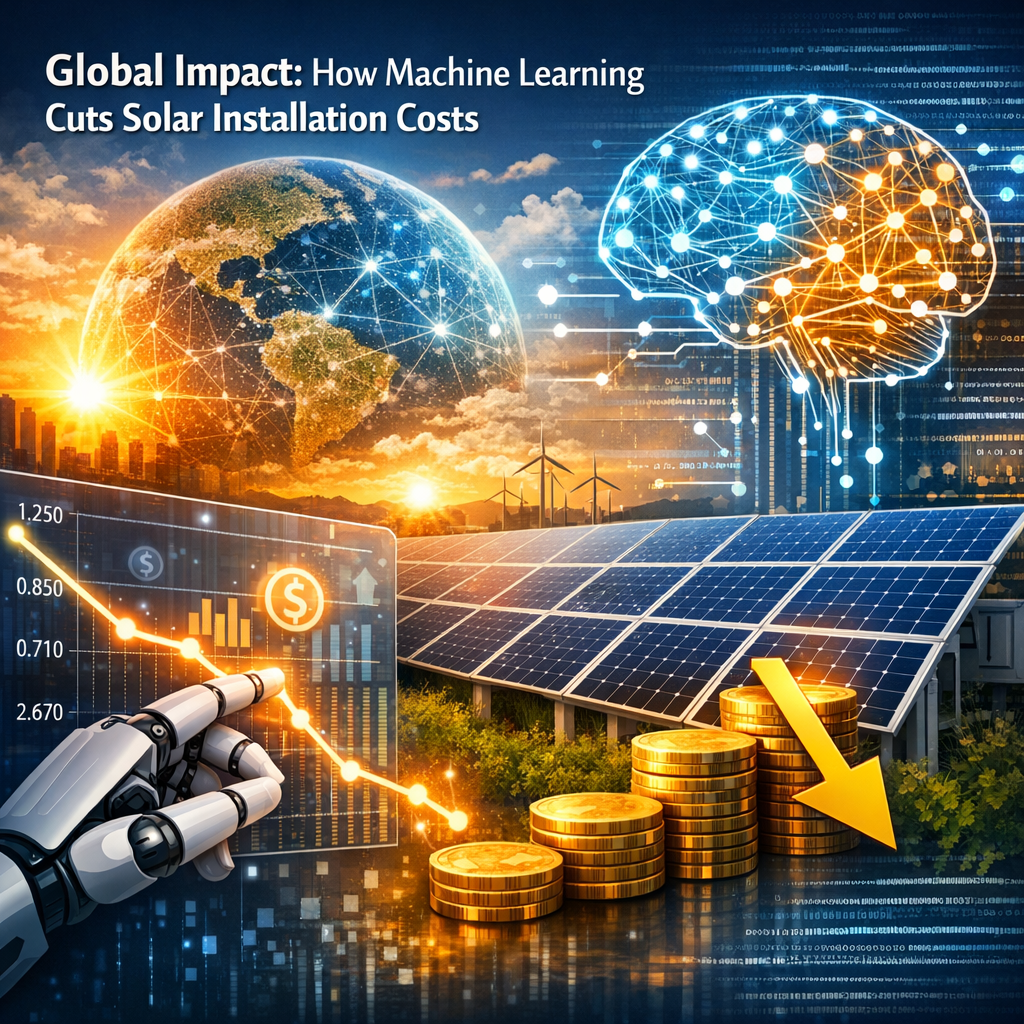
Global Impact: How Machine Learning Cuts Solar Installation Costs
How Machine Learning is Reducing Solar Installation Costs Worldwide
The adoption of solar energy is exploding worldwide, powered by its promise of tapping into a clean, inexhaustible source of power. However, one of the significant hurdles in the deployment of solar energy systems is the high initial cost of installation. Machine learning, a dynamic and rapidly evolving branch of artificial intelligence, is pioneering ways to reduce these costs and make solar power more accessible. Let’s explore how machine learning is making solar installations more affordable across the globe.
Streamlining Site Assessment
Optimizing Location and Design
One of the initial stages in solar panel installation involves assessing potential sites and designing systems that maximize energy production while minimizing costs. Traditionally, this process required extensive human input and physical surveying which is both time-consuming and costly. Machine learning algorithms have dramatically changed this by enabling faster, more accurate predictions of solar generation potential based on historical weather data, land topography, and other environmental factors.
Predictive Analytics for Panel Placement
Machine learning models can analyze vast amounts of data to recommend the optimal placement of solar panels. This not only includes the positioning relative to the sun’s path but also considers local weather patterns, potential shading from nearby structures, and even predicted future construction developments. Such precision in planning helps in maximizing the energy output, thereby increasing the efficiency of the solar power system.
Enhancing Efficiency with Predictive Maintenance
Reducing Downtime
Solar arrays require regular maintenance to operate at optimal efficiency. Machine learning helps predict potential failures or inefficiencies in solar panels by continuously monitoring their performance. This predictive maintenance can significantly reduce downtime and prevent costly repairs that may arise from sudden failures.
Automated Anomaly Detection
Through routine data collection, machine learning algorithms can detect anomalies that signify faults or declining efficiency in solar panels. This early detection enables technicians to address issues before they escalate into major problems, thereby prolonging the lifespan of solar installations and ensuring consistent energy production.
Cost-Effective Manufacturing through AI Integration
Streamlined Production Processes
Advances in machine learning have also permeated the manufacturing processes of solar panels. AI-enhanced automation in factories allows for faster production schedules, improved quality control, and reduced wastage. Machine learning algorithms optimize the use of materials and predict machinery malfunctions, ensuring smoother operations with minimal delays.
Resource Optimization
Machine learning assists manufacturers in predicting the optimal allocation of resources including raw materials and manpower, reducing overhead costs. By analyzing trends and production data, AI can forecast demand cycles, helping manufacturers adjust production rates accordingly, which prevents overproduction and excess inventory costs.
Accelerating Permitting and Regulatory Compliance
Automated Document Processing
Obtaining the necessary permits for installing solar panels can be a prolonged and tedious process. Machine learning streamlines this by automating the processing of regulatory documents, compliance reports, and permit applications. This reduces manual labor hours and expedites government approvals, accelerating project timelines.
Compliance Optimization
AI tools analyze and interpret regulations to ensure that designs and installations comply with local laws, avoiding costly modifications and legal challenges. This not only speeds up the installation process but also builds confidence among stakeholders about the adherence to regulatory norms.
Conclusion
Machine learning is not merely a technological advancement; it’s a transformative tool that is reshaping the solar industry. By reducing installation times, enhancing efficiency, and lowering production costs, AI is making solar energy a more feasible and attractive option for energy generation worldwide. As we move towards a more sustainable future, the integration of machine learning with solar technologies holds the promise of making green energy universally accessible and affordable, sparking a global shift in our energy infrastructure.