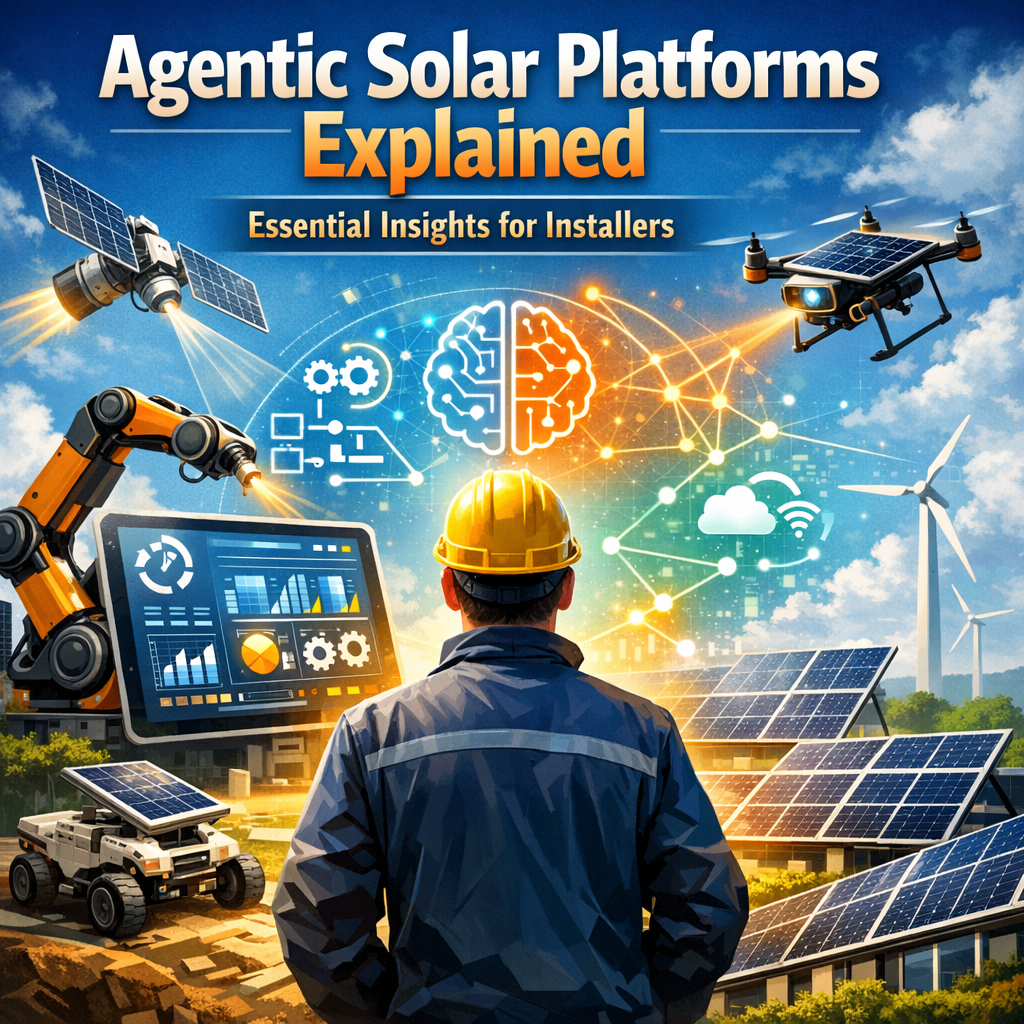
# The Rise of Agentic Solar Platforms: What Installers Need to Know

The solar industry has witnessed significant transformations over the years, predominantly driven by technological advancements and the increasing urgency of global sustainability efforts. Among these innovations, agentic solar platforms have emerged as a game-changer, redefining how solar installations are designed, monitored, and maintained. For installers venturing into or thriving within this evolving landscape, understanding these platforms is crucial for staying competitive and efficient.

What is an Agentic Solar Platform?


An agentic solar platform integrates AI technologies and advanced data analytics to enhance the effectiveness and efficiency of solar power systems. Unlike traditional platforms, these systems not only collect data but also analyze and make decisions to optimize performance autonomously. They represent a leap from passive to active management of solar assets.

Key Features:

- Predictive Maintenance: Identification of potential issues before they become problematic.
- Performance Optimization: Real-time adjustments to maximize energy output.
- Enhanced Monitoring: Detailed insights into the health and efficiency of each solar module.

Benefits for Installers


Adopting agentic solar platforms offers numerous advantages that can dramatically alter the landscape for installers:

Efficiency Gains

Installers can achieve significant time and cost savings through streamlined operations. Automated processes reduce the need for on-site checks and maintenance, allowing teams to manage larger portfolios more effectively.

Improved Customer Satisfaction

With systems running at optimal capacity, customer satisfaction improves. This operational efficiency boosts word-of-mouth referrals and strengthens installer reputations in a competitive market.

Scalable Operations

Agentic platforms enable installers to take on more projects without proportionally increasing their overheads. Scalability becomes feasible as technology handles complexity incrementally.

Challenges and Considerations


While the benefits are compelling, there are challenges that need addressing:

Cost of Implementation

The initial setup for a sophisticated agentic solar platform can be considerable. Installers must evaluate the long-term ROI versus these upfront costs.

Technical Skill Requirements

A certain level of technical proficiency is required to manage these advanced systems. This might necessitate additional training or hiring specialized staff.

Data Security

With the heavy reliance on data, ensuring its security is paramount. Installers must ensure robust cybersecurity measures are in place to protect sensitive information.

Best Practices for Integration


To maximize the potential of agentic solar platforms, installers should consider the following best practices:

Constant Training

Staying updated on the latest technological advancements and training staff accordingly is vital for maximizing the use of these platforms.

Choose the Right Platform

Not all platforms are created equal. Select one that best fits the specific needs of your clientele and scale of operations.

Monitor and Adapt

Regularly review the data provided by these platforms to better understand patterns, optimize usage, and refine customer offerings.

The Future Outlook


As the demand for renewable energy solutions grows, the significance of agentic solar platforms will only increase. They are set to become a standard in the industry, driving efficiency, and sustainability. For solar installers, the early adoption of these platforms could mean a substantial competitive edge and the opportunity to lead in a tech-driven market.

In conclusion, while the transition to agentic solar platforms may come with its set of challenges, the long-term benefits they offer make them an invaluable investment for the future of any solar installation business. Keeping abreast of technological innovations and integrating them into business operations effectively will be key to thriving in the rapidly evolving solar industry.