
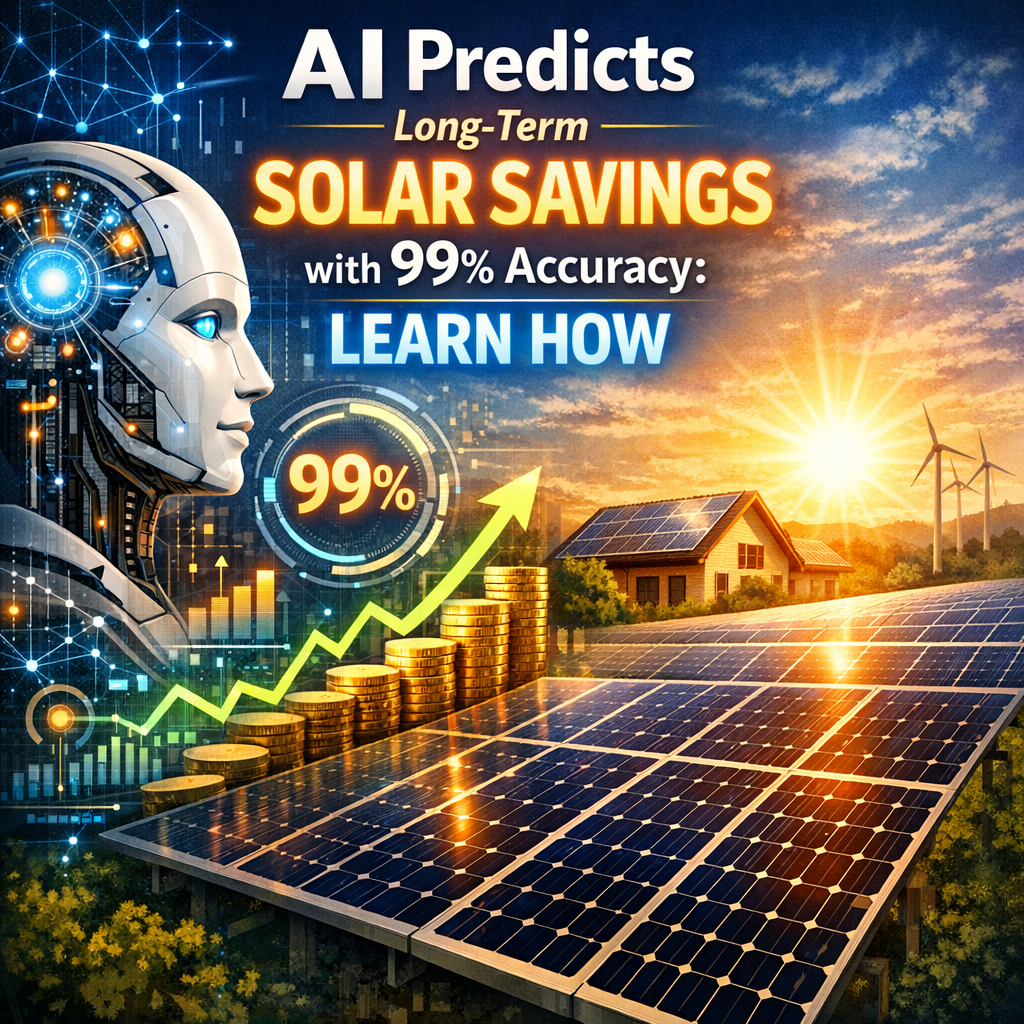
AI Predicts Long-Term Solar Savings with 99% Accuracy: Learn How
How AI Predicts Long-Term Solar Savings With 99% Accuracy
The integration of Artificial Intelligence (AI) into the solar energy sector is revolutionizing how homeowners and businesses calculate the long-term benefits and savings from solar panel installations. With an astonishing accuracy rate of 99%, AI tools are now pivotal in providing customized insights that help individuals and companies make informed decisions about their investments in solar energy. In this blog post, we’ll explore how AI achieves this level of precision and why it’s a game-changer for the solar power industry.
Understanding the Role of AI in Solar Energy Calculations
The Basics of AI and Machine Learning
At its core, AI involves creating computer systems that can perform tasks which typically require human intelligence. These tasks include decision-making, pattern recognition, and predictive analytics. In the context of solar savings, AI uses machine learning algorithms to analyze vast amounts of data related to solar energy production and consumption.
Data Sources and Processing
AI systems for solar predictions harness data from a variety of sources including historical weather patterns, solar irradiance, local electricity rates, and hardware performance. This data is processed and analyzed to forecast how much energy a solar panel system will generate and what the potential savings might be over an extended period.
Key Factors AI Considers in Predictions
1. Geographical Location
Sunlight availability varies vastly across different regions. AI tools evaluate geographic data to predict the potential solar power generation based on local climate conditions and sun exposure.
2. System Design and Size
Not all solar setups are alike. AI considers the specific design and size of a planned solar system, including the orientation and angle of panels, to estimate efficiency and output.
3. Local Energy Costs and Solar Incentives
Electricity prices and regional solar incentives like tax credits and rebates are crucial in determining the financial benefits of solar panels. AI algorithms are updated with current tariff rates and subsidy information to provide accurate financial savings estimates.
4. Consumption Patterns
Household or business energy consumption patterns play a big role in solar savings. AI examines past utility bills and load profiles to forecast future energy use and how much of it can be directly offset by solar power.
Examples of AI in Action
Case Study 1: Residential Solar Savings
For a family considering solar panels, an AI tool analyzed their average electricity usage, peak hours of consumption, and the rates charged by their utility company. By also incorporating local sunlight data and possible panel placements on their property, the system provided a detailed 20-year savings estimate.
Case Study 2: Commercial Solar Investments
A large manufacturing facility explored solar energy to reduce operational costs. An AI application considered the plant’s power usage patterns, industrial tariffs, and available roof space to predict not only the cost savings but also the potential increase in property value.
Benefits of Using AI for Solar Savings Predictions
Increased Accuracy
The high accuracy of AI predictions minimizes risks and can lead to greater confidence in investment decisions. This is crucial for expensive installations like solar panels where upfront costs are significant.
Customized Solutions
Every home or business is unique, and AI provides personalized analysis based on specific circumstances and needs, which stand-alone calculators or generic estimates cannot offer.
Dynamic Simulation Capabilities
AI can simulate various scenarios under different conditions to help potential investors see how changes in the market or environment might affect their solar returns.
Conclusion
The near-perfect accuracy achieved by AI in predicting long-term solar savings demonstrates the powerful impact of technology on renewable energy investments. This level of precision ensures that stakeholders can rely heavily on these forecasts to make decisions that are both financially and environmentally sound. As AI technology progresses, its integration with the solar sector is expected to deepen, making sustainable investment choices ever more accessible and lucrative.
Transforming solar investment strategies with AI not only optimizes financial returns but also plays a critical role in advancing global sustainability objectives. Owners, whether residential or commercial, equipped with such detailed, accurate forecasts can contribute significantly to the shift towards a more sustainable future.