
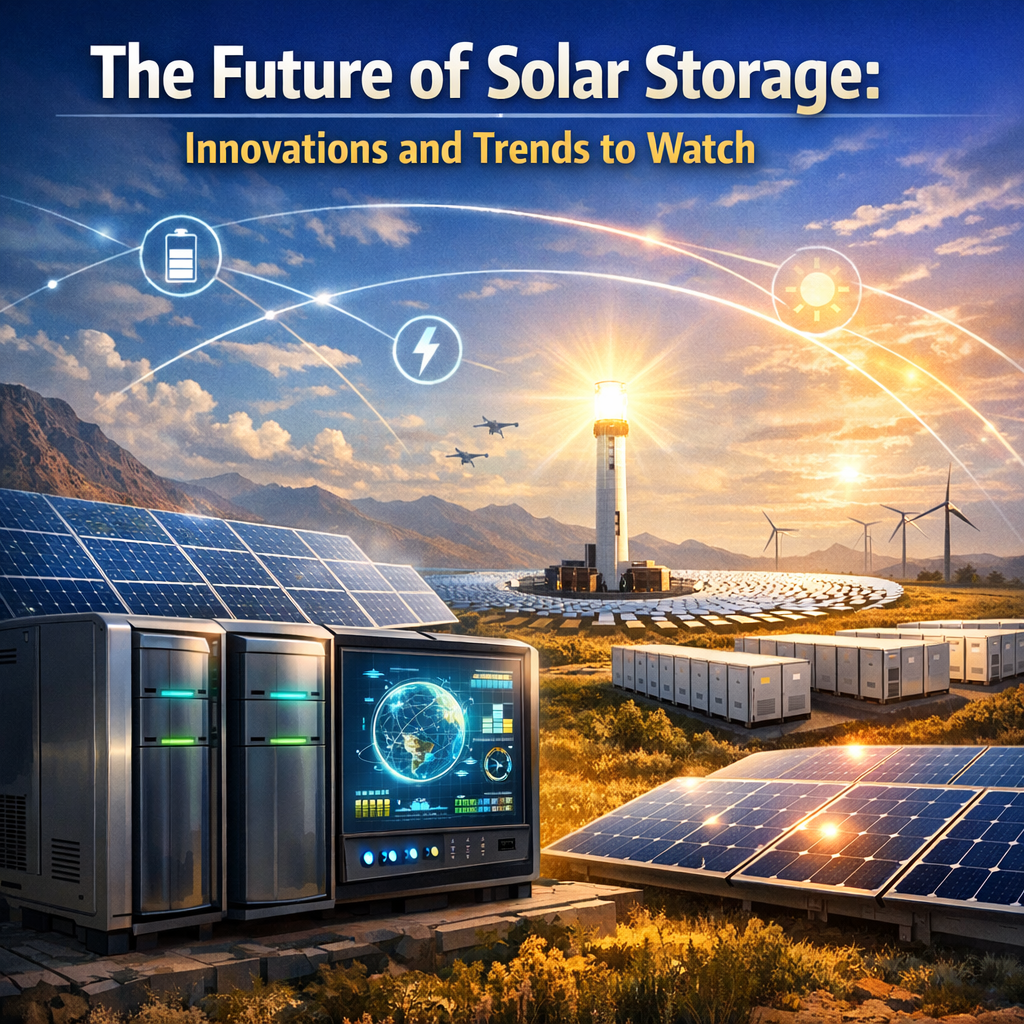
The Future of Solar Storage: Innovations and Trends to Watch
The Evolution of Solar Storage: What’s Coming Next
The world of energy is transforming quickly, with renewable sources like solar power taking the front seat. An integral aspect of this shift is the evolution of solar storage technology, which has seen rapid advancements in recent years. As we look ahead, expect to see even more innovative progress that will enhance the way we harness and utilize solar energy.
Understanding Solar Storage
Solar storage involves capturing the energy generated by solar panels during sunny periods and storing it for later use, typically in batteries. This stored energy can then be used at night or during cloudy days, making solar power a more reliable and consistent energy source.
The Early Days
Initially, solar storage was rudimentary, with lead-acid batteries being the primary option. These were bulky, had a limited lifespan, and required significant maintenance. Their efficiency in energy conversion and storage was also quite low, which posed challenges for early adopters of solar technology.
Current Advancements in Solar Storage
In recent years, solar storage technology has seen some remarkable advancements, primarily through the development of lithium-ion batteries. These batteries, known for their use in smartphones and electric vehicles, offer higher efficiency and energy density, longer lifespans, and require less maintenance compared to their predecessors.
Expansion of Lithium-Ion Technology
The widespread adoption of lithium-ion technology has been pivotal. These batteries feature improved charging times, greater energy storage capacity, and better sustainability, making them ideal for residential and commercial solar systems.
Integration with Smart Technology
Another key development has been the integration of solar storage systems with smart technology. Smart solar batteries can now efficiently manage energy storage and distribution based on real-time data and predictive analytics. This integration enhances the overall efficiency of solar systems, optimizing them for varying energy demands and reducing waste.
What’s Coming Next in Solar Storage
Looking forward, the evolution of solar storage is poised to address efficiency, capacity, and ecological impact comprehensively.
Next-Generation Battery Technology
Emerging battery technologies like solid-state and graphene batteries are set to offer even more advantages. Solid-state batteries promise higher energy densities and enhanced safety profiles by removing the flammable liquid electrolyte used in lithium-ion batteries. Graphene, with its exceptional conductivity and flexibility, could potentially revolutionize battery efficiency and charging speeds.
Enhanced Solar Panel Integration
Future solar systems are likely to incorporate storage options more seamlessly. This might include solar panels with integrated battery storage or hybrid models that can switch between solar generation and other renewable sources with ease.
Software and AI Enhancements
Artificial intelligence and machine learning will play a significant role in the future of solar storage. These technologies will refine how solar storage systems predict, react to, and balance energy supply and demand. This will result in even more optimal energy use and decreased dependency on traditional power grids.
Better Recycling and Sustainability Practices
As the adoption of solar storage grows, so does the need for better recycling practices. Future technological advancements will likely focus on making solar batteries more recyclable, reducing environmental impact and enhancing the sustainability of solar systems.
Conclusion
The future of solar storage is bright, filled with promising advancements that aim to make renewable energy more effective and widespread. As battery technology evolves and integration and sustainability practices improve, solar energy will become even more integral to our global energy landscape. Whether for individual homes, businesses, or large-scale energy needs, the evolution of solar storage holds the key to a cleaner, more sustainable future.