
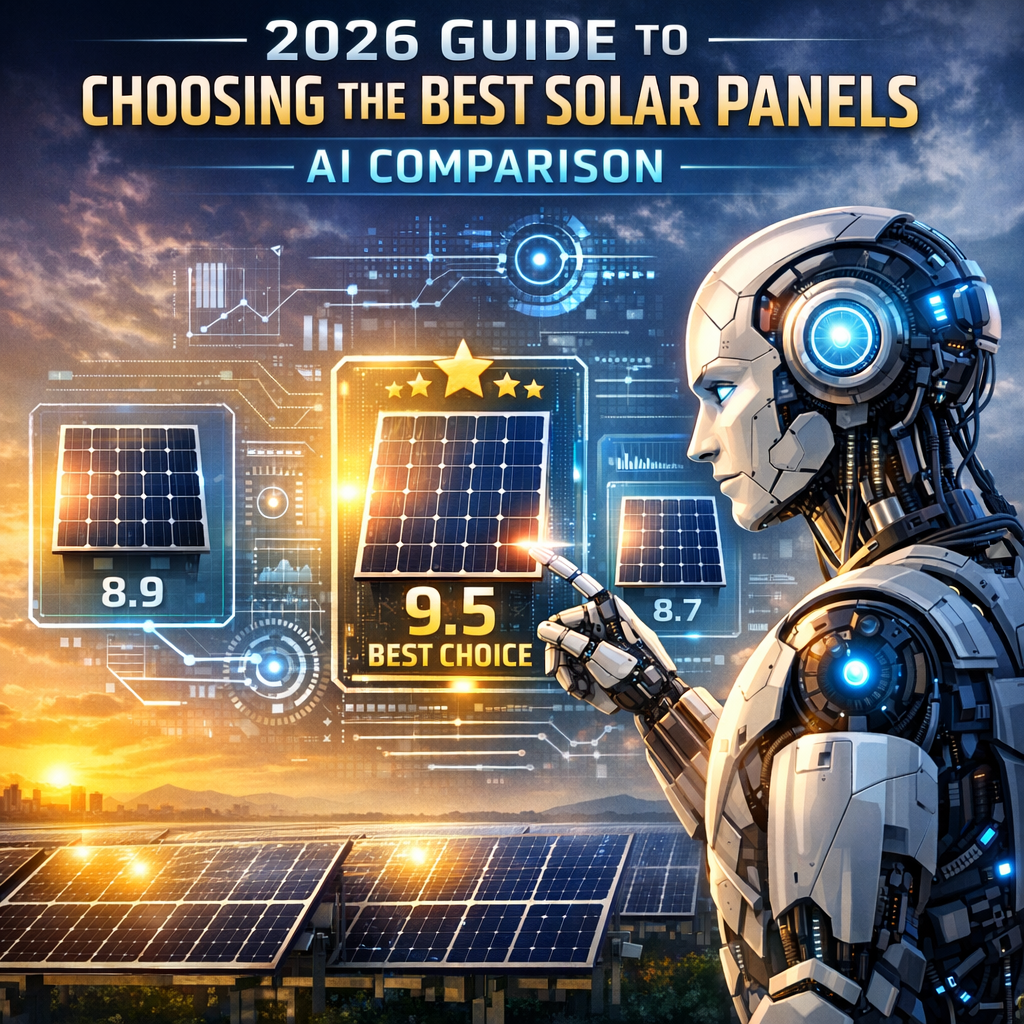
2026 Guide to Choosing the Best Solar Panels: AI Comparison
Choosing the Best Solar Panels in 2026: AI‑Powered Comparison Guide
In the rapidly advancing world of renewable energy, solar technology continues to be at the forefront of innovations that aim to make sustainable living more accessible and efficient. As we venture into 2026, choosing the best solar panels for your needs involves navigating a complex market filled with numerous brands, technologies, and price points. Luckily, artificial intelligence (AI) is revolutionizing how we compare and select solar panels, ensuring that homeowners and businesses can make informed decisions based on comprehensive, data-driven insights.
Understanding Solar Panel Technology
Before diving into how AI can assist in choosing the right solar panels, it’s crucial to understand the basic components that define the efficiency and quality of solar panels:
Types of Solar Panels
- Monocrystalline Solar Panels: Known for high efficiency and sleek design, these panels are ideal for areas with limited space.
- Polycrystalline Solar Panels: Generally more affordable but slightly less efficient than monocrystalline panels.
- Thin-film Solar Panels: These panels are lightweight and versatile, with lower efficiency but better performance in low-light conditions.
Key Features to Consider
- Efficiency: Measures how well a panel converts sunlight into electricity.
- Durability: Assesses the panel’s ability to withstand environmental conditions.
- Warranty: Longer warranties often signal a manufacturer’s confidence in their product.
- Price: Balancing upfront costs with long-term energy savings is crucial.
The Role of AI in Solar Panel Comparison
AI technologies have streamlined the process of comparing solar panels by analyzing vast amounts of data to predict performance, durability, and cost-effectiveness. Here’s how AI is transforming the solar panel selection process:
Advanced Data Analysis
AI algorithms can process data from thousands of solar installations to predict the long-term value and effectiveness of different solar panel brands and models.
Customized Recommendations
Based on your geographical location, energy needs, and budget, AI tools can offer personalized product recommendations that meet your specific requirements.
Performance Simulation
AI-driven tools simulate various environmental conditions to forecast how different types of solar panels will perform in your particular locale.
Real-time Price Optimization
AI systems keep track of price fluctuations and government incentives, providing you with the most cost-efficient choices at any given time.
How to Use AI Tools for Solar Panel Comparison
To leverage AI in your quest for the best solar panels, consider the following steps:
Step 1: Define Your Energy Needs
Calculate your average energy usage to determine the capacity you need from your solar installation.
Step 2: Use AI Comparison Tools
Utilize online AI-powered comparison tools that require input about your energy needs, location, and budget. These tools will analyze the information and present a list of recommended solar panels that fit your criteria.
Step 3: Review AI Insights
Examine the detailed analytics and projections provided by AI, focusing on efficiency ratings, durability predictions, and estimated savings over time.
Step 4: Consider Environmental Impact
Opt for panels that not only meet your energy and cost criteria but also have a lower environmental impact, as suggested by AI sustainability metrics.
Final Thoughts
Selecting solar panels in 2026 is more than about finding a cost-effective solution; it’s about making a long-term investment in renewable energy. With AI as your guide, you can navigate this complex market with confidence, ensuring that your choice aligns with both your personal needs and the broader goal of sustainable development. Harness the power of AI to make a well-informed decision that contributes to a cleaner, greener planet.